

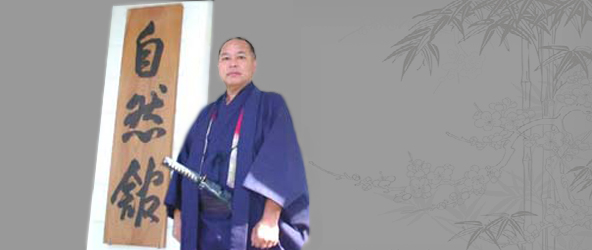


Ranking
In order to test for rank, students must be a Jinenkan member. The Jinenkan testing process is rigorous. Students are expected to come to their tests completely prepared and confident in their ability to pass the test. Study with Jinenkan instructors, attendance at Jinenkan seminars, and thorough study of rank test videotapes are the best ways to prepare for tests.
The uniform for unranked and kyu-ranked members is a dark blue keikogi and black or navy training pants with the appropriate color belt. The uniform for dan-ranked members is a dark blue keikogi and a dark blue hakama. Jinenkan instructors wear a white with black stitch patterned gi and a dark blue hakama.
All certified Jinenkan instructors (dojo-cho) are able to test students through the kyu levels. After that point, three sandan (third dan) ranked members or one yondan (fourth level) are required to test students for their shodan (first dan). A panel of two yondan or one godan can test students for nidan (second dan). At this point, only Unsui Sensei will conduct tests for sandan (third dan) and above.
Once a student has passed sandan, s/he may apply to the honbu to become a certified instructor (dojo-cho).
There are three kyu ranks and nine dan ranks in the Jinenkan. Each student starts with a white belt and proceeds through third kyu (green belt), second kyu (purple belt), and first kyu (brown belt). At this point in training, the student begins preparing for his or her first dan (shodan) rank.
Sankyu |
Nikyu |
Zenpo Kaiten |
Koho Kaiten |
Sokuho Kaiten |
Yoko Nagare |
Fudo Ken |
Omote Shuto |
Shikan Ken |
Ura Shuto |
Omote Gyaku |
Zenpo Geri |
Ura Gyaku |
Ganseki Nage |
Ikkyu |
|
| Zenpo Ukemi | |
Tate Nagare |
|
Sokuho Geri |
|
Koho Geri |
|
Kakushi Geri |
|
Oni Kudaki |
|
Muso Dori |
|
Shodan |
|
Kihon Happo Ichimonji no Kata Koto Ryu Kamae Sayu Seigan Koto Ryu Kata Koyoku Gyokko Ryu Kamae Sayu Ichimonji Gyokko Ryu Kata Koku |
Kukishin Ryu Rokushakubojutsu Kamae Sayu Seigan Kukishin Ryu Sanjyakubojutsu Kamae Kata Yaburi |
A written test is also conducted on the meaning of each of
the above kamae. |
|
Nidan |
|
Koto Ryu Kata |
Kukishin Ryu Sanjakubojutsu Kihon Happo |
Hosoku Shito |
Sayu Katate Buri Sayu Kote Uchi Sayu Kote Gaeshi Uchi Sayu Kote Jime Sayu Ashi Dori |
Gyokko Ryu Kata |
Kukishin Ryu Rokushakubo Kihon Gata |
Renyo Danshu |
Sayu Bofuri Sayu Men Uchi (Tento uchi) Sayu Yoko Men Sayu Do Uchi Sayu Ashi Barai Gedan Haneage Tsuki Jodan Uke |
Sandan |
|
Koto Ryu Kata |
Kukishin Ryu Sanjakubojutsu Kata |
Yokuto |
Katate Uchi |
Gyokko Ryu Kata |
Tsuki Otoshi |
Danshi |
Uchigi |
Kukishin Ryu Dakentaijutsu Kata |
|
Seion |
Kukishin Ryu Rokushakubo Kata |
Shinden Fudo Ryu Dakentaijutsu Kata |
Goho |
Nichi Geki |
Ura Goho |
Takagi Yoshin Ryu Kata |
Sashi Ai |
Kasumi Dori |
|
At this point, the student may apply to the honbu to
become a certified instructor (dojo-cho). |
|
Yondan |
|
Koto Ryu Kata |
Kukishin Ryu Sanjakubojutsu Kata |
Ogyaku |
Nagare Dori, Kasumi Gake, Kao Kudaki, |
Gyokko Ryu Kata |
Saka Otoshi, Ate Gaeshi, Kote Gaeshi, Soto Wa, |
Saka Nagare |
Hane Otoshi, Mata Gake, Kote Harai |
Kukishin Ryu Dakentaijutsu Kata |
|
Sui Yoku |
Kukishin Ryu Rokushakubo Kata
|
Shinden Fudo Ryu Dakentaijutsu Kata |
Tsuru no Issoku, Suso Otoshi, Ippon Sugi, Tatsu |
Gekkan |
Otoshi, Koku, Tachi Otoshi, Yamate Zuki, Geki Ku, |
Takagi Yoshin Ryu Kata |
Tenchijin, Tama Gaeshi |
Do Gaeshi |
|
The examiner will chose 3 out of the 10 kata of Sanjakubo and Rokushakubo at the time of the test. |
|